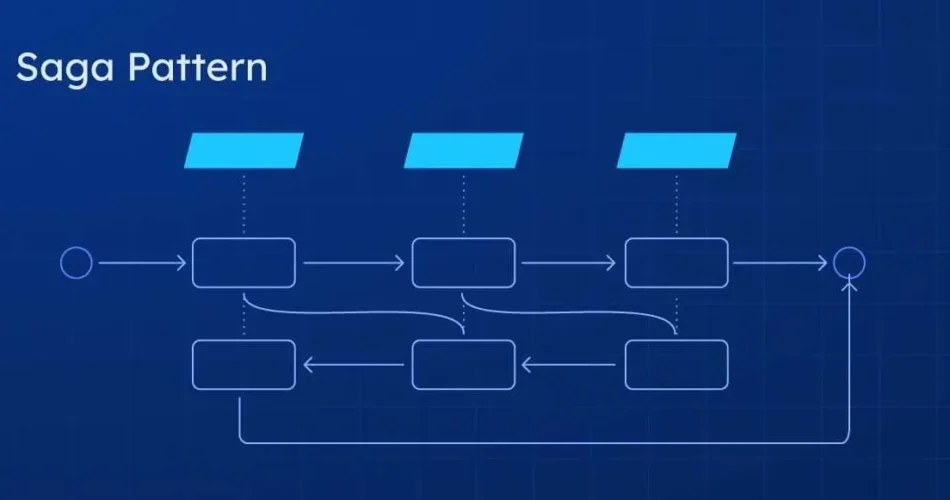
Most Saga tutorials either stop at “call service A then service B” or gloss over the annoying parts (async replies, idempotency, correlation, compensations). This post doesn’t. We’ll wire up:
- Temporal Workflow that acts as the orchestrator/state machine.
- Activities that publish commands to a message bus.
- Microservices that handle commands and publish events.
- A tiny signal-bridge that listens to events and signals the workflow.
We’ll simulate a checkout
demo-saga/
  docker-compose.yml        # Temporal + UI + NATS
  orchestrator/
    activities/publish.go   # Activities publish commands to NATS
    workflows/order_workflow.go
    worker/main.go
  signal-bridge/
    main.go                 # NATS evt.* -> Temporal Signal
  services/
    order/main.go
    payment/main.go
    inventory/main.go
  pkg/util/nats.go          # tiny NATS helpers
  cmd/start_workflow/main.go
The workflow publishes commands like cmd.payment.reserve. Services emit events like evt.payment.reserved. The bridge converts evt.* → Temporal Signal that wakes the workflow.
Bootstrapping infra
docker compose up -d     # Temporal + Temporal UI + NATS
go run ./orchestrator/worker
go run ./signal-bridge
go run ./services/order
go run ./services/payment
go run ./services/inventory
go run ./cmd/start_workflow --order-id=order-1 --should-fail-inventory=true
Open Temporal UI at http://localhost:8080 and watch the steps + compensations in history.
Activities: “fire-and-forget” commands
Activities are small, retryable units. Here they publish commands to NATS. That’s it. They don’t wait for replies—because replies are events that come back later via Signals.
// orchestrator/activities/publish.go
package activities

import (
    "context"
    "fmt"
    "demo-saga/pkg/util"
)

type Activities struct{}

func (a *Activities) PublishOrderCreate(ctx context.Context, sagaID string) error {
    nc, err := util.ConnectNATS(); if err != nil { return err }
    defer nc.Close()
    msg := util.Msg{SagaID: sagaID}
    fmt.Println("[ACT] cmd.order.create", util.MustJSON(msg))
    return util.PublishJSON(nc, "cmd.order.create", msg)
}

func (a *Activities) PublishPaymentReserve(ctx context.Context, sagaID string, amount int) error {
    nc, err := util.ConnectNATS(); if err != nil { return err }
    defer nc.Close()
    msg := util.Msg{SagaID: sagaID, Payload: map[string]interface{}{"amount": amount}}
    fmt.Println("[ACT] cmd.payment.reserve", util.MustJSON(msg))
    return util.PublishJSON(nc, "cmd.payment.reserve", msg)
}

func (a *Activities) PublishPaymentRefund(ctx context.Context, sagaID string) error {
    nc, err := util.ConnectNATS(); if err != nil { return err }
    defer nc.Close()
    msg := util.Msg{SagaID: sagaID}
    fmt.Println("[ACT] cmd.payment.refund", util.MustJSON(msg))
    return util.PublishJSON(nc, "cmd.payment.refund", msg)
}

func (a *Activities) PublishInventoryReserve(ctx context.Context, sagaID, sku string, qty int) error {
    nc, err := util.ConnectNATS(); if err != nil { return err }
    defer nc.Close()
    msg := util.Msg{SagaID: sagaID, Payload: map[string]interface{}{"sku": sku, "qty": qty}}
    fmt.Println("[ACT] cmd.inventory.reserve", util.MustJSON(msg))
    return util.PublishJSON(nc, "cmd.inventory.reserve", msg)
}

func (a *Activities) PublishInventoryRelease(ctx context.Context, sagaID string) error {
    nc, err := util.ConnectNATS(); if err != nil { return err }
    defer nc.Close()
    msg := util.Msg{SagaID: sagaID}
    fmt.Println("[ACT] cmd.inventory.release", util.MustJSON(msg))
    return util.PublishJSON(nc, "cmd.inventory.release", msg)
}

func (a *Activities) PublishOrderCancel(ctx context.Context, sagaID string) error {
    nc, err := util.ConnectNATS(); if err != nil { return err }
    defer nc.Close()
    msg := util.Msg{SagaID: sagaID}
    fmt.Println("[ACT] cmd.order.cancel", util.MustJSON(msg))
    return util.PublishJSON(nc, "cmd.order.cancel", msg)
}
Why this design?
- Activities are retried by Temporal on failure (network hiccups, etc.).
- We keep them simple and idempotent: publishing the same command twice should not break services (your services should de-duplicate by
sagaId).
Workflow: the state machine that waits for Signals
The workflow tells services what to do (via Activities) and blocks until the corresponding event arrives as a Signal. If anything goes wrong, we run compensations in reverse.
// orchestrator/workflows/order_workflow.go
package workflows

import (
    "errors"
    "fmt"
    "time"

    "demo-saga/orchestrator/activities"
    "go.temporal.io/sdk/temporal"
    "go.temporal.io/sdk/workflow"
)

type OrderInput struct {
    SagaID              string
    Amount              int
    SKU                 string
    Qty                 int
    ShouldFailInventory bool // demo flag
}

func OrderWorkflow(ctx workflow.Context, in OrderInput) error {
    ao := workflow.ActivityOptions{
        StartToCloseTimeout: time.Second * 10,
        RetryPolicy:         &temporal.RetryPolicy{MaximumAttempts: 3},
    }
    ctx = workflow.WithActivityOptions(ctx, ao)
    var a activities.Activities

    // 1) Create order and wait for confirmation
    if err := workflow.ExecuteActivity(ctx, a.PublishOrderCreate, in.SagaID).Get(ctx, nil); err != nil {
        return err
    }
    if err := waitForEvent(ctx, "evt.order.created", in.SagaID); err != nil {
        return err
    }

    // 2) Reserve payment; on failure, cancel order
    if err := workflow.ExecuteActivity(ctx, a.PublishPaymentReserve, in.SagaID, in.Amount).Get(ctx, nil); err != nil {
        return err
    }
    if err := waitForOneOf(ctx, in.SagaID, "evt.payment.reserved", "evt.payment.failed"); err != nil {
        _ = workflow.ExecuteActivity(ctx, a.PublishOrderCancel, in.SagaID).Get(ctx, nil)
        return fmt.Errorf("payment failed: %w", err)
    }

    // 3) Reserve inventory; on failure, refund & cancel
    if err := workflow.ExecuteActivity(ctx, a.PublishInventoryReserve, in.SagaID, in.SKU, in.Qty).Get(ctx, nil); err != nil {
        return err
    }
    if in.ShouldFailInventory {
        // demo mode: the inventory service may emit a failed event
    }
    if err := waitForOneOf(ctx, in.SagaID, "evt.inventory.reserved", "evt.inventory.failed"); err != nil {
        _ = workflow.ExecuteActivity(ctx, a.PublishPaymentRefund, in.SagaID).Get(ctx, nil)
        _ = workflow.ExecuteActivity(ctx, a.PublishOrderCancel, in.SagaID).Get(ctx, nil)
        return fmt.Errorf("inventory failed: %w", err)
    }

    // success path (you could continue to shipping here)
    return nil
}

// ========== wait helpers ==========

func waitForEvent(ctx workflow.Context, eventName, sagaID string) error {
    ch := workflow.GetSignalChannel(ctx, signalName(eventName, sagaID))
    var payload string
    ch.Receive(ctx, &payload)
    if payload == "ERROR" {
        return errors.New(eventName + " error")
    }
    return nil
}

// Waits for either a success or a failure event, returns error if failure is received
func waitForOneOf(ctx workflow.Context, sagaID, successEvt, failEvt string) error {
    sCh := workflow.GetSignalChannel(ctx, signalName(successEvt, sagaID))
    fCh := workflow.GetSignalChannel(ctx, signalName(failEvt, sagaID))
    selector := workflow.NewSelector(ctx)

    var gotErr error
    selector.AddReceive(sCh, func(c workflow.ReceiveChannel, _ bool) { gotErr = nil })
    selector.AddReceive(fCh, func(c workflow.ReceiveChannel, _ bool) { gotErr = fmt.Errorf("%s", failEvt) })
    selector.Select(ctx)
    return gotErr
}

func signalName(event, sagaID string) string {
    return fmt.Sprintf("%s::%s", event, sagaID)
}
Why Signals over “async activity completion”?
Signals keep the workflow purely event-driven and easy to reason about. The services don’t need Temporal SDKs—they just publish events to the bus; the bridge converts bus → signal. It’s a simple, strong boundary.
The signal-bridge: the tiny but important adapter
Temporal workflows don’t consume NATS directly. The bridge subscribes to evt.*, pulls out the correlation ID (sagaId), and signals the correct workflow instance.
// signal-bridge/main.go
package main

import (
    "context"
    "encoding/json"
    "fmt"
    "log"

    "demo-saga/pkg/util"
    "github.com/nats-io/nats.go"
    "go.temporal.io/sdk/client"
)

type Event struct {
    SagaID  string                 `json:"sagaId"`
    Payload map[string]interface{} `json:"payload"`
}

func main() {
    nc, err := util.ConnectNATS(); if err != nil { log.Fatal(err) }
    defer nc.Close()

    c, err := client.NewClient(client.Options{})
    if err != nil { log.Fatal("temporal client:", err) }
    defer c.Close()

    subjects := []string{
        "evt.order.created",
        "evt.order.canceled",
        "evt.payment.reserved",
        "evt.payment.failed",
        "evt.payment.refunded",
        "evt.inventory.reserved",
        "evt.inventory.failed",
        "evt.inventory.released",
    }

    for _, subj := range subjects {
        _, err := nc.Subscribe(subj, func(m *nats.Msg) {
            var e Event
            if err := json.Unmarshal(m.Data, &e); err != nil {
                log.Println("bad event:", err)
                return
            }
            sig := fmt.Sprintf("%s::%s", subj, e.SagaID)
            log.Println("bridge -> signal", sig)
            if err := c.SignalWorkflow(context.Background(), e.SagaID, "", sig, string(m.Data)); err != nil {
                log.Println("signal err:", err)
            }
        })
        if err != nil { log.Fatal(err) }
    }

    log.Println("signal-bridge running")
    select {}
}
Why a separate process?
It keeps concerns clean: services don’t need to know Temporal exists; the workflow doesn’t need NATS code. The bridge is small, easy to scale, and easy to harden (DLQs, retries).
Services: dumb, predictable, testable
Each service just subscribes to cmd.* and publishes evt.*. They don’t hold saga state; they do their piece and tell the world what happened.
// services/payment/main.go
package main

import (
    "encoding/json"
    "log"

    "demo-saga/pkg/util"
    "github.com/nats-io/nats.go"
)

type Msg = util.Msg

func main() {
    nc, err := util.ConnectNATS(); if err != nil { log.Fatal(err) }
    defer nc.Close()

    nc.Subscribe("cmd.payment.reserve", func(m *nats.Msg) {
        var msg Msg; _ = json.Unmarshal(m.Data, &msg)
        log.Println("[payment] reserve", util.MustJSON(msg))
        // demo: always succeed
        util.PublishJSON(nc, "evt.payment.reserved", msg)
    })

    nc.Subscribe("cmd.payment.refund", func(m *nats.Msg) {
        var msg Msg; _ = json.Unmarshal(m.Data, &msg)
        log.Println("[payment] refund", util.MustJSON(msg))
        util.PublishJSON(nc, "evt.payment.refunded", msg)
    })

    log.Println("payment service running")
    select {}
}
Starting the workflow (the CLI)
// cmd/start_workflow/main.go (excerpt)
opts := client.StartWorkflowOptions{
    ID:        "order-1",          // the sagaId
    TaskQueue: "ORDER_TASK_QUEUE",
}
in := workflows.OrderInput{
    SagaID: "order-1", Amount: 100, SKU: "SKU-1", Qty: 1,
    ShouldFailInventory: true, // flip to see compensation
}
we, err := c.ExecuteWorkflow(ctx, opts, workflows.OrderWorkflow, in)
Advantages of this structure
1) Signals keep the workflow honest.
We don’t pretend the workflow can “listen to NATS.” It can’t. With Signals, we model the truth: services publish events; someone needs to deliver them into the workflow. That someone is the bridge.
2) Activities are just command publishers.
They don’t wait for replies, they don’t block on I/O longer than necessary, and they’re idempotent. If we duplicate a command, the service should de-dupe based on sagaId. That’s realistic.
3) Correlation first, everything else second.
Every message has a sagaId. Signal names are "event::sagaId". That’s how we direct replies to the right workflow instance. This alone removes tons of accidental complexity.
4) Compensations belong to the orchestrator’s brain.
Services don’t “know” the saga; they just expose forward/undo endpoints through commands. The workflow decides when the undo happens, and Temporal makes the history visible so you can debug.
5) Separation of concerns ages well.
- Replace NATS with Kafka? Only the bridge and util code move.
- Add Shipping? New commands/events, same pattern.
- Switch to sync HTTP calls later? Replace Activities; the workflow orchestration stays the same.
Wrap-up
You now have a runnable, event-driven Saga with clear separation:
- Workflow: state machine + failure policy
- Activities: commands out
- Services: business actions + events out
- Bridge: events → workflow signals
This is the foundation you can take to production. Add shipping, swap NATS for Kafka, scale out the bridge, harden idempotency—you’ll still keep the same mental model.